swift · memo
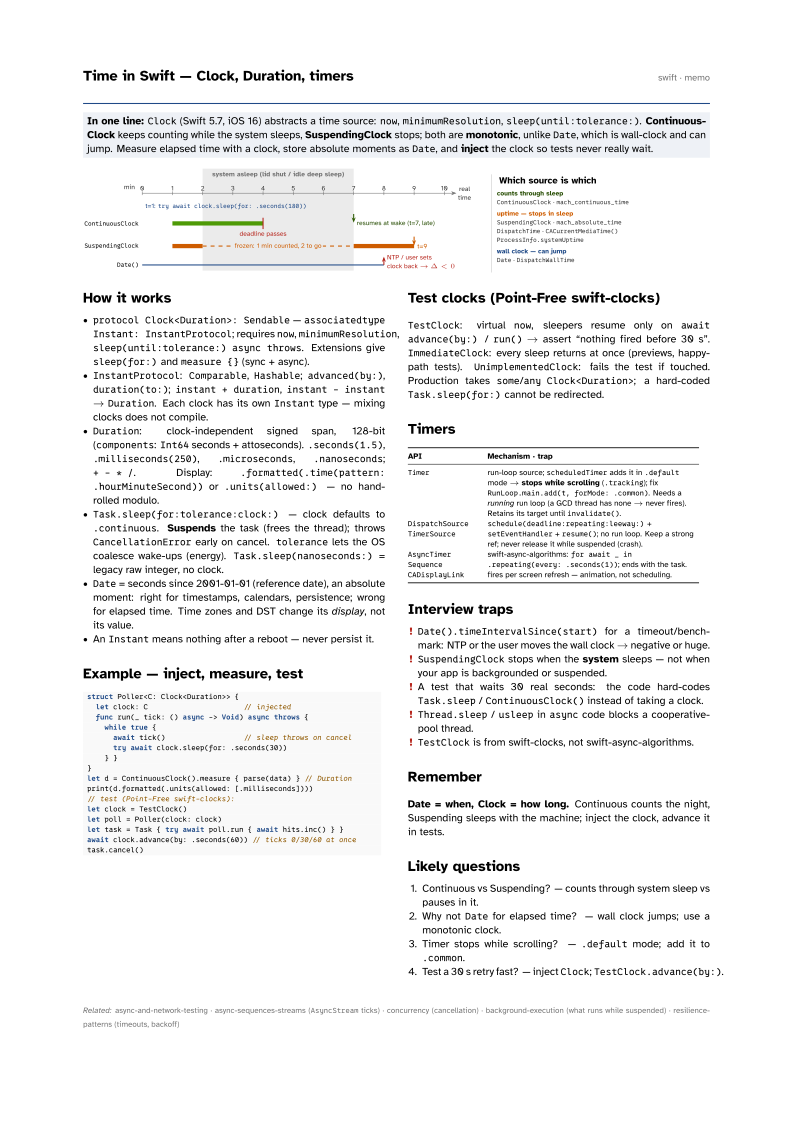
In one line: Clock (Swift 5.7, iOS 16) abstracts a time source: now,
minimumResolution, sleep(until:tolerance:). ContinuousClock keeps
counting while the system sleeps, SuspendingClock stops; both are
monotonic, unlike Date, which is wall-clock and can jump. Measure elapsed
time with a clock, store absolute moments as Date, and inject the clock so
tests never really wait.
Download PDF Print view LaTeX source

How it works
protocol Clock<Duration>: Sendable—associatedtype Instant: InstantProtocol; requiresnow,minimumResolution,sleep(until:tolerance:) async throws. Extensions givesleep(for:)andmeasure {}(sync + async).InstantProtocol:Comparable,Hashable;advanced(by:),duration(to:);instant + duration,instant - instant→Duration. Each clock has its ownInstanttype — mixing clocks does not compile.Duration: clock-independent signed span, 128-bit (components:Int64seconds + attoseconds)..seconds(1.5),.milliseconds(250),.microseconds,.nanoseconds;+ - * /. Display:.formatted(.time(pattern: .hourMinuteSecond))or.units(allowed:)— no hand-rolled modulo.Task.sleep(for:tolerance:clock:)— clock defaults to.continuous. Suspends the task (frees the thread); throwsCancellationErrorearly on cancel.tolerancelets the OS coalesce wake-ups (energy).Task.sleep(nanoseconds:)= legacy raw integer, no clock.Date= seconds since 2001-01-01 (reference date), an absolute moment: right for timestamps, calendars, persistence; wrong for elapsed time. Time zones and DST change its display, not its value.- An
Instantmeans nothing after a reboot — never persist it.
Example — inject, measure, test
struct Poller<C: Clock<Duration>> {
  let clock: C                      // injected
  func run(_ tick: () async -> Void) async throws {
    while true {
      await tick()                  // sleep throws on cancel
      try await clock.sleep(for: .seconds(30))
    } }
}
let d = ContinuousClock().measure { parse(data) } // Duration
print(d.formatted(.units(allowed: [.milliseconds])))
// test (Point-Free swift-clocks):
let clock = TestClock()
let poll = Poller(clock: clock)
let task = Task { try await poll.run { await hits.inc() } }
await clock.advance(by: .seconds(60)) // ticks 0/30/60 at once
task.cancel()
Test clocks (Point-Free swift-clocks)
TestClock: virtual now, sleepers resume only on await advance(by:) / run() → assert “nothing fired before 30 s”. ImmediateClock: every sleep returns at once (previews, happy-path tests). UnimplementedClock: fails the test if touched. Production takes some/any Clock<Duration>; a hard-coded Task.sleep(for:) cannot be redirected.
Timers
| API | Mechanism · trap |
|---|---|
Timer | run-loop source; scheduledTimer adds it in .default
mode → stops while scrolling (.tracking); fix
RunLoop.main.add(t, forMode: .common). Needs a running run loop
(a GCD thread has none → never fires). Retains its target until
invalidate(). |
DispatchSource TimerSource | schedule(deadline:repeating:leeway:)
+ setEventHandler + resume(); no run loop. Keep a strong ref;
never release it while suspended (crash). |
AsyncTimer Sequence | swift-async-algorithms:
for await _ in .repeating(every: .seconds(1)); ends with the task. |
CADisplayLink | fires per screen refresh — animation, not scheduling. |
Interview traps
Date().timeIntervalSince(start)for a timeout/benchmark: NTP or the user moves the wall clock → negative or huge.SuspendingClockstops when the system sleeps — not when your app is backgrounded or suspended.- A test that waits 30 real seconds: the code hard-codes
Task.sleep/ContinuousClock()instead of taking a clock. Thread.sleep/usleepinasynccode blocks a cooperative-pool thread.TestClockis from swift-clocks, not swift-async-algorithms.
Remember
Date = when, Clock = how long. Continuous counts the night, Suspending sleeps with the machine; inject the clock, advance it in tests.
Likely questions
- Continuous vs Suspending? — counts through system sleep vs pauses in it.
- Why not
Datefor elapsed time? — wall clock jumps; use a monotonic clock. - Timer stops while scrolling? —
.defaultmode; add it to.common. - Test a 30 s retry fast? — inject
Clock;TestClock.advance(by:).