build · memo
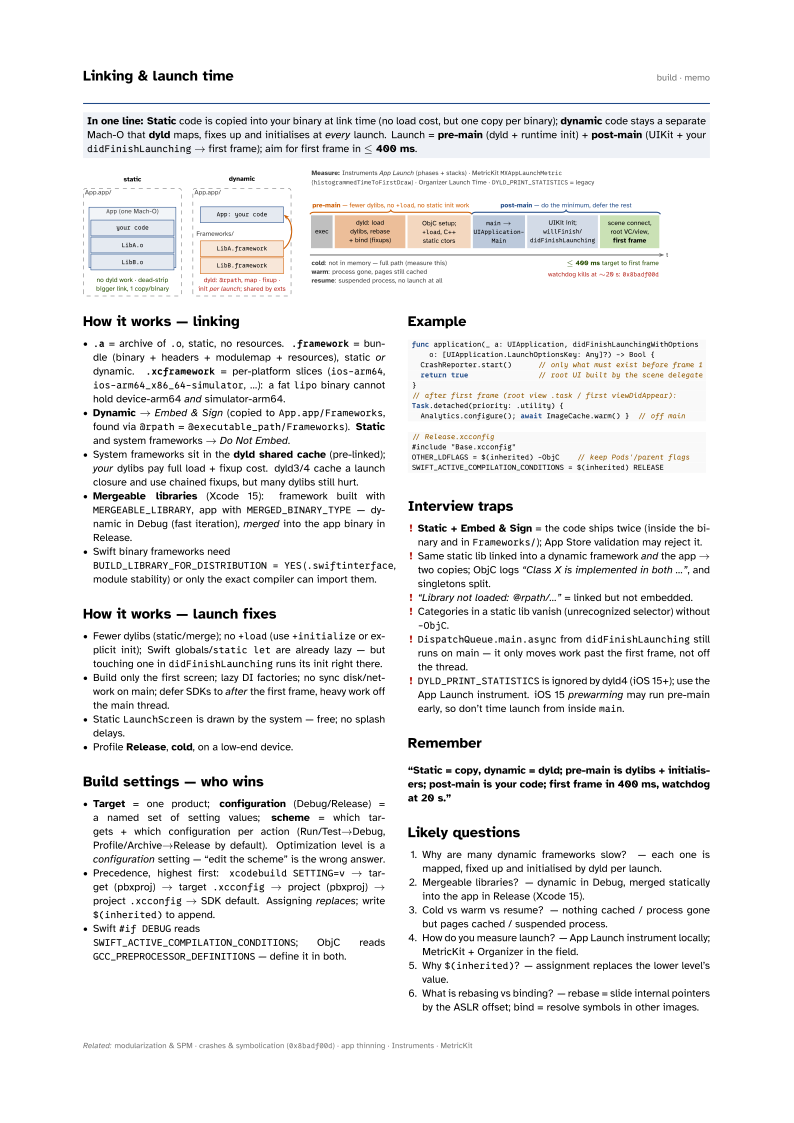
In one line: Static code is copied into your binary at link time (no load cost,
but one copy per binary); dynamic code stays a separate Mach-O that dyld maps,
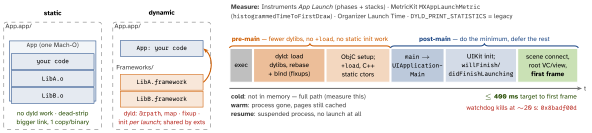
fixes up and initialises at every launch. Launch = pre-main (dyld + runtime
init) + post-main (UIKit + your didFinishLaunching → first frame); aim for
first frame in ≤ 400 ms.
Download PDF Print view LaTeX source
How it works — linking
.a= archive of.o, static, no resources..framework= bundle (binary + headers + modulemap + resources), static or dynamic..xcframework= per-platform slices (ios-arm64,ios-arm64_x86_64-simulator, …): a fatlipobinary cannot hold device-arm64 and simulator-arm64.- Dynamic → Embed & Sign (copied to
App.app/Frameworks, found via@rpath=@executable_path/Frameworks). Static and system frameworks → Do Not Embed. - System frameworks sit in the dyld shared cache (pre-linked); your dylibs pay full load + fixup cost. dyld3/4 cache a launch closure and use chained fixups, but many dylibs still hurt.
- Mergeable libraries (Xcode 15): framework built with
MERGEABLE_LIBRARY, app withMERGED_BINARY_TYPE— dynamic in Debug (fast iteration), merged into the app binary in Release. - Swift binary frameworks need
BUILD_LIBRARY_FOR_DISTRIBUTION = YES(.swiftinterface, module stability) or only the exact compiler can import them.
How it works — launch fixes
- Fewer dylibs (static/merge); no
+load(use+initializeor explicit init); Swift globals/static letare already lazy — but touching one indidFinishLaunchingruns its init right there. - Build only the first screen; lazy DI factories; no sync disk/network on main; defer SDKs to after the first frame, heavy work off the main thread.
- Static
LaunchScreenis drawn by the system — free; no splash delays. - Profile Release, cold, on a low-end device.
Build settings — who wins
- Target = one product; configuration (Debug/Release) = a named set of setting values; scheme = which targets + which configuration per action (Run/Test→Debug, Profile/Archive→Release by default). Optimization level is a configuration setting — “edit the scheme” is the wrong answer.
- Precedence, highest first:
xcodebuild SETTING=v→ target (pbxproj) → target.xcconfig→ project (pbxproj) → project.xcconfig→ SDK default. Assigning replaces; write$(inherited)to append. - Swift
#if DEBUGreadsSWIFT_ACTIVE_COMPILATION_CONDITIONS; ObjC readsGCC_PREPROCESSOR_DEFINITIONS— define it in both.
Example
func application(_ a: UIApplication, didFinishLaunchingWithOptions
    o: [UIApplication.LaunchOptionsKey: Any]?) -> Bool {
  CrashReporter.start()      // only what must exist before frame 1
  return true                // root UI built by the scene delegate
}
// after first frame (root view .task / first viewDidAppear):
Task.detached(priority: .utility) {
  Analytics.configure(); await ImageCache.warm() }  // off main
// Release.xcconfig
#include "Base.xcconfig"
OTHER_LDFLAGS = $(inherited) -ObjC // keep Pods'/parent flags
SWIFT_ACTIVE_COMPILATION_CONDITIONS = $(inherited) RELEASEInterview traps
- Static + Embed & Sign = the code ships twice (inside the binary and in
Frameworks/); App Store validation may reject it. - Same static lib linked into a dynamic framework and the app → two copies; ObjC logs “Class X is implemented in both …”, and singletons split.
- “Library not loaded: @rpath/…” = linked but not embedded.
- Categories in a static lib vanish (unrecognized selector) without
-ObjC. DispatchQueue.main.asyncfromdidFinishLaunchingstill runs on main — it only moves work past the first frame, not off the thread.DYLD_PRINT_STATISTICSis ignored by dyld4 (iOS 15+); use the App Launch instrument. iOS 15 prewarming may run pre-main early, so don’t time launch from insidemain.
Remember
“Static = copy, dynamic = dyld; pre-main is dylibs + initialisers; post-main is your code; first frame in 400 ms, watchdog at 20 s.”
Likely questions
- Why are many dynamic frameworks slow? — each one is mapped, fixed up and initialised by dyld per launch.
- Mergeable libraries? — dynamic in Debug, merged statically into the app in Release (Xcode 15).
- Cold vs warm vs resume? — nothing cached / process gone but pages cached / suspended process.
- How do you measure launch? — App Launch instrument locally; MetricKit + Organizer in the field.
- Why
$(inherited)? — assignment replaces the lower level’s value. - What is rebasing vs binding? — rebase = slide internal pointers by the ASLR offset; bind = resolve symbols in other images.