runtime · memo
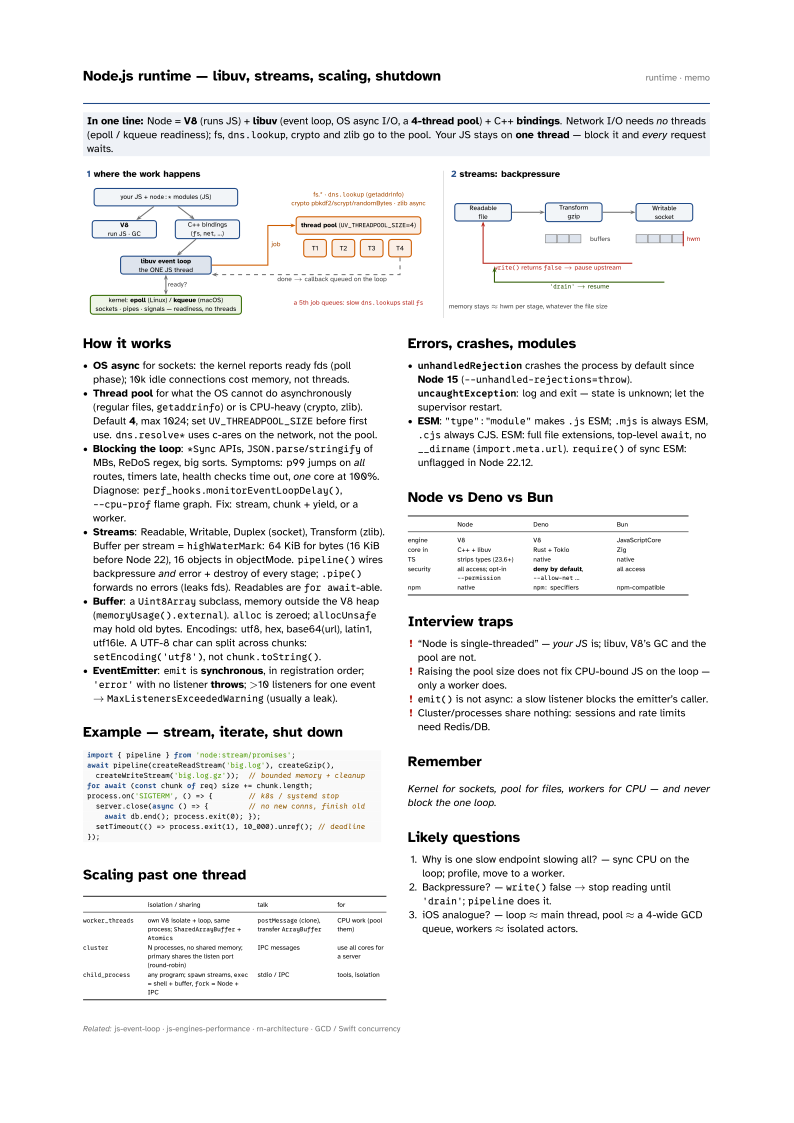
In one line: Node = V8 (runs JS) + libuv (event loop, OS async I/O, a
4-thread pool) + C++ bindings. Network I/O needs no threads (epoll /
kqueue readiness); fs, dns.lookup, crypto and zlib go to the pool. Your JS stays on
one thread — block it and every request waits.
Download PDF Print view LaTeX source
How it works
- OS async for sockets: the kernel reports ready fds (poll phase); 10k idle connections cost memory, not threads.
- Thread pool for what the OS cannot do asynchronously (regular files,
getaddrinfo) or is CPU-heavy (crypto, zlib). Default 4, max 1024; setUV_THREADPOOL_SIZEbefore first use.dns.resolve*uses c-ares on the network, not the pool. - Blocking the loop:
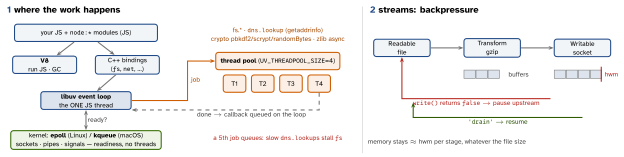
*SyncAPIs,JSON.parse/stringifyof MBs, ReDoS regex, big sorts. Symptoms: p99 jumps on all routes, timers late, health checks time out, one core at 100%. Diagnose:perf_hooks.monitorEventLoopDelay(),--cpu-profflame graph. Fix: stream, chunk + yield, or a worker. - Streams: Readable, Writable, Duplex (socket), Transform (zlib). Buffer per stream =
highWaterMark: 64 KiB for bytes (16 KiB before Node 22), 16 objects in objectMode.pipeline()wires backpressure and error + destroy of every stage;.pipe()forwards no errors (leaks fds). Readables arefor await-able. - Buffer: a
Uint8Arraysubclass, memory outside the V8 heap (memoryUsage().external).allocis zeroed;allocUnsafemay hold old bytes. Encodings: utf8, hex, base64(url), latin1, utf16le. A UTF-8 char can split across chunks:setEncoding('utf8'), notchunk.toString(). - EventEmitter:
emitis synchronous, in registration order;'error'with no listener throws; >10 listeners for one event →MaxListenersExceededWarning(usually a leak).
Example — stream, iterate, shut down
import { pipeline } from 'node:stream/promises';
await pipeline(createReadStream('big.log'), createGzip(),
  createWriteStream('big.log.gz'));  // bounded memory + cleanup
for await (const chunk of req) size += chunk.length;
process.on('SIGTERM', () => {        // k8s / systemd stop
  server.close(async () => {         // no new conns, finish old
    await db.end(); process.exit(0); });
  setTimeout(() => process.exit(1), 10_000).unref(); // deadline
});
Scaling past one thread
| isolation / sharing | talk | for | |
|---|---|---|---|
worker_threads | own V8 isolate + loop, same process; SharedArrayBuffer + Atomics | postMessage (clone), transfer ArrayBuffer | CPU work (pool them) |
cluster | N processes, no shared memory; primary shares the listen port (round-robin) | IPC messages | use all cores for a server |
child_process | any program; spawn streams, exec = shell + buffer, fork = Node + IPC | stdio / IPC | tools, isolation |
Errors, crashes, modules
unhandledRejectioncrashes the process by default since Node 15 (--unhandled-rejections=throw).uncaughtException: log and exit — state is unknown; let the supervisor restart.- ESM:
"type":"module"makes.jsESM;.mjsis always ESM,.cjsalways CJS. ESM: full file extensions, top-levelawait, no__dirname(import.meta.url).require()of sync ESM: unflagged in Node 22.12.
Node vs Deno vs Bun
| Node | Deno | Bun | |
|---|---|---|---|
| engine | V8 | V8 | JavaScriptCore |
| core in | C++ + libuv | Rust + Tokio | Zig |
| TS | strips types (23.6+) | native | native |
| security | all access; opt-in --permission | deny by default, --allow-net … | all access |
| npm | native | npm: specifiers | npm-compatible |
Interview traps
- “Node is single-threaded” — your JS is; libuv, V8’s GC and the pool are not.
- Raising the pool size does not fix CPU-bound JS on the loop — only a worker does.
emit()is not async: a slow listener blocks the emitter’s caller.- Cluster/processes share nothing: sessions and rate limits need Redis/DB.
Remember
Kernel for sockets, pool for files, workers for CPU — and never block the one loop.
Likely questions
- Why is one slow endpoint slowing all? — sync CPU on the loop; profile, move to a worker.
- Backpressure? —
write()false → stop reading until'drain';pipelinedoes it. - iOS analogue? — loop ≈ main thread, pool ≈ a 4-wide GCD queue, workers ≈ isolated actors.