react-native · memo
In one line: A senior answers in trade-offs: RN = one React/TS codebase driving real native views, native code where the OS or the frame budget demands it — and a big app kept modular, observable, secure, accessible.
Download PDF Print view LaTeX source
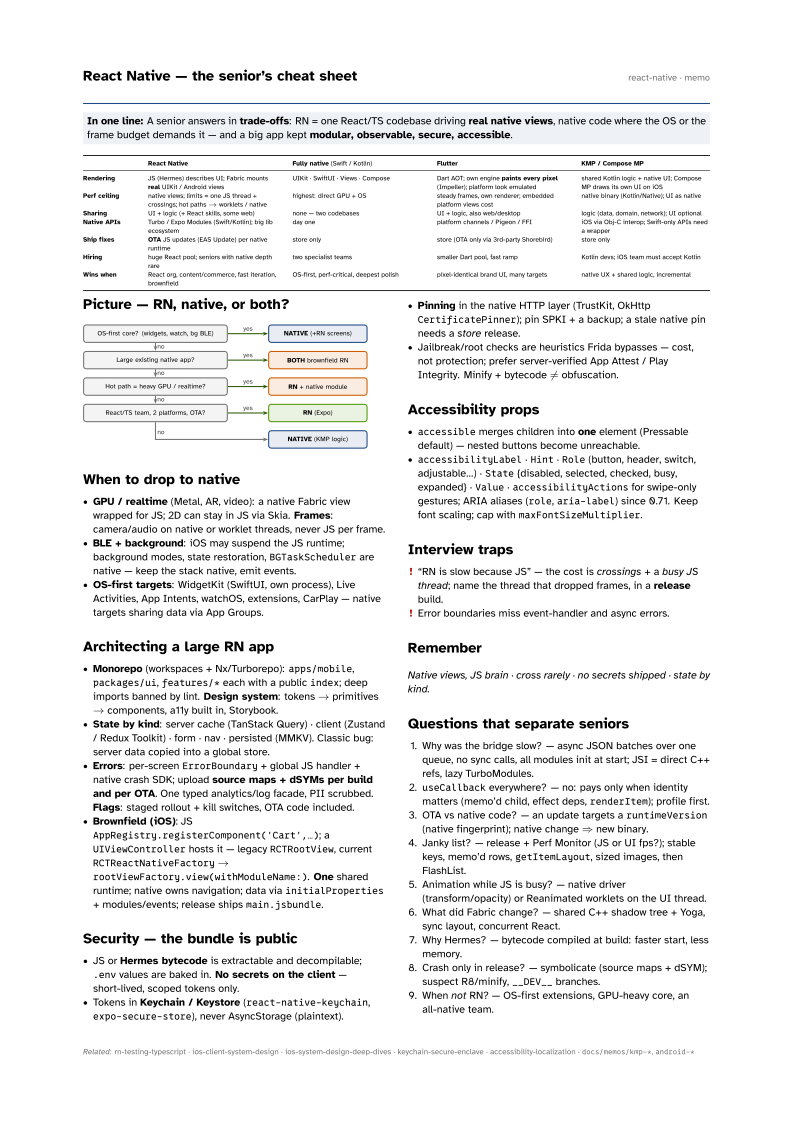
| React Native | Fully native (Swift / Kotlin) | Flutter | KMP / Compose MP | |
|---|---|---|---|---|
| Rendering | JS (Hermes) describes UI; Fabric mounts real UIKit / Android views | UIKit · SwiftUI · Views · Compose | Dart AOT; own engine paints every pixel (Impeller); platform look emulated | shared Kotlin logic + native UI; Compose MP draws its own UI on iOS |
| Perf ceiling | native views; limits = one JS thread + crossings; hot paths → worklets / native | highest: direct GPU + OS | steady frames, own renderer; embedded platform views cost | native binary (Kotlin/Native); UI as native |
| Sharing | UI + logic (+ React skills, some web) | none — two codebases | UI + logic, also web/desktop | logic (data, domain, network); UI optional |
| Native APIs | Turbo / Expo Modules (Swift/Kotlin); big lib ecosystem | day one | platform channels / Pigeon / FFI | iOS via Obj-C interop; Swift-only APIs need a wrapper |
| Ship fixes | OTA JS updates (EAS Update) per native runtime | store only | store (OTA only via 3rd-party Shorebird) | store only |
| Hiring | huge React pool; seniors with native depth rare | two specialist teams | smaller Dart pool, fast ramp | Kotlin devs; iOS team must accept Kotlin |
| Wins when | React org, content/commerce, fast iteration, brownfield | OS-first, perf-critical, deepest polish | pixel-identical brand UI, many targets | native UX + shared logic, incremental |
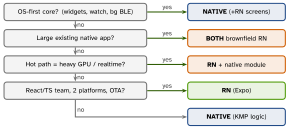
Picture — RN, native, or both?
When to drop to native
- GPU / realtime (Metal, AR, video): a native Fabric view wrapped for JS; 2D can stay in JS via Skia. Frames: camera/audio on native or worklet threads, never JS per frame.
- BLE + background: iOS may suspend the JS runtime; background modes, state restoration,
BGTaskSchedulerare native — keep the stack native, emit events. - OS-first targets: WidgetKit (SwiftUI, own process), Live Activities, App Intents, watchOS, extensions, CarPlay — native targets sharing data via App Groups.
Architecting a large RN app
- Monorepo (workspaces + Nx/Turborepo):
apps/mobile,packages/ui,features/*each with a publicindex; deep imports banned by lint. Design system: tokens → primitives → components, a11y built in, Storybook. - State by kind: server cache (TanStack Query) · client (Zustand / Redux Toolkit) · form · nav · persisted (MMKV). Classic bug: server data copied into a global store.
- Errors: per-screen
ErrorBoundary+ global JS handler + native crash SDK; upload source maps + dSYMs per build and per OTA. One typed analytics/log facade, PII scrubbed. Flags: staged rollout + kill switches, OTA code included. - Brownfield (iOS): JS
AppRegistry.registerComponent('Cart',…); aUIViewControllerhosts it — legacyRCTRootView, currentRCTReactNativeFactory→rootViewFactory.view(withModuleName:). One shared runtime; native owns navigation; data viainitialProperties+ modules/events; release shipsmain.jsbundle.
Security — the bundle is public
- JS or Hermes bytecode is extractable and decompilable;
.envvalues are baked in. No secrets on the client — short-lived, scoped tokens only. - Tokens in Keychain / Keystore (
react-native-keychain,expo-secure-store), never AsyncStorage (plaintext). - Pinning in the native HTTP layer (TrustKit, OkHttp
CertificatePinner); pin SPKI + a backup; a stale native pin needs a store release. - Jailbreak/root checks are heuristics Frida bypasses — cost, not protection; prefer server-verified App Attest / Play Integrity. Minify + bytecode ≠ obfuscation.
Accessibility props
accessiblemerges children into one element (Pressable default) — nested buttons become unreachable.accessibilityLabel·Hint·Role(button, header, switch, adjustable…) ·State{disabled, selected, checked, busy, expanded} ·Value·accessibilityActionsfor swipe-only gestures; ARIA aliases (role,aria-label) since 0.71. Keep font scaling; cap withmaxFontSizeMultiplier.
Interview traps
- “RN is slow because JS” — the cost is crossings + a busy JS thread; name the thread that dropped frames, in a release build.
- Error boundaries miss event-handler and async errors.
Remember
Native views, JS brain · cross rarely · no secrets shipped · state by kind.
Questions that separate seniors
- Why was the bridge slow? — async JSON batches over one queue, no sync calls, all modules init at start; JSI = direct C++ refs, lazy TurboModules.
useCallbackeverywhere? — no: pays only when identity matters (memo’d child, effect deps,renderItem); profile first.- OTA vs native code? — an update targets a
runtimeVersion(native fingerprint); native change ⇒ new binary. - Janky list? — release + Perf Monitor (JS or UI fps?); stable keys, memo’d rows,
getItemLayout, sized images, then FlashList. - Animation while JS is busy? — native driver (transform/opacity) or Reanimated worklets on the UI thread.
- What did Fabric change? — shared C++ shadow tree + Yoga, sync layout, concurrent React.
- Why Hermes? — bytecode compiled at build: faster start, less memory.
- Crash only in release? — symbolicate (source maps + dSYM); suspect R8/minify,
__DEV__branches. - When not RN? — OS-first extensions, GPU-heavy core, an all-native team.