ios-swift · memo
In one line: GCD submits closures to queues and blocks
threads to wait; Swift Concurrency suspends tasks at
await (the thread is freed) and lets the compiler prove
safety with actors (serialised state), @MainActor (UI) and
Sendable (what may cross). Rule zero in both: UIKit only on
the main thread.
Download PDF Print view LaTeX source
How it works — GCD
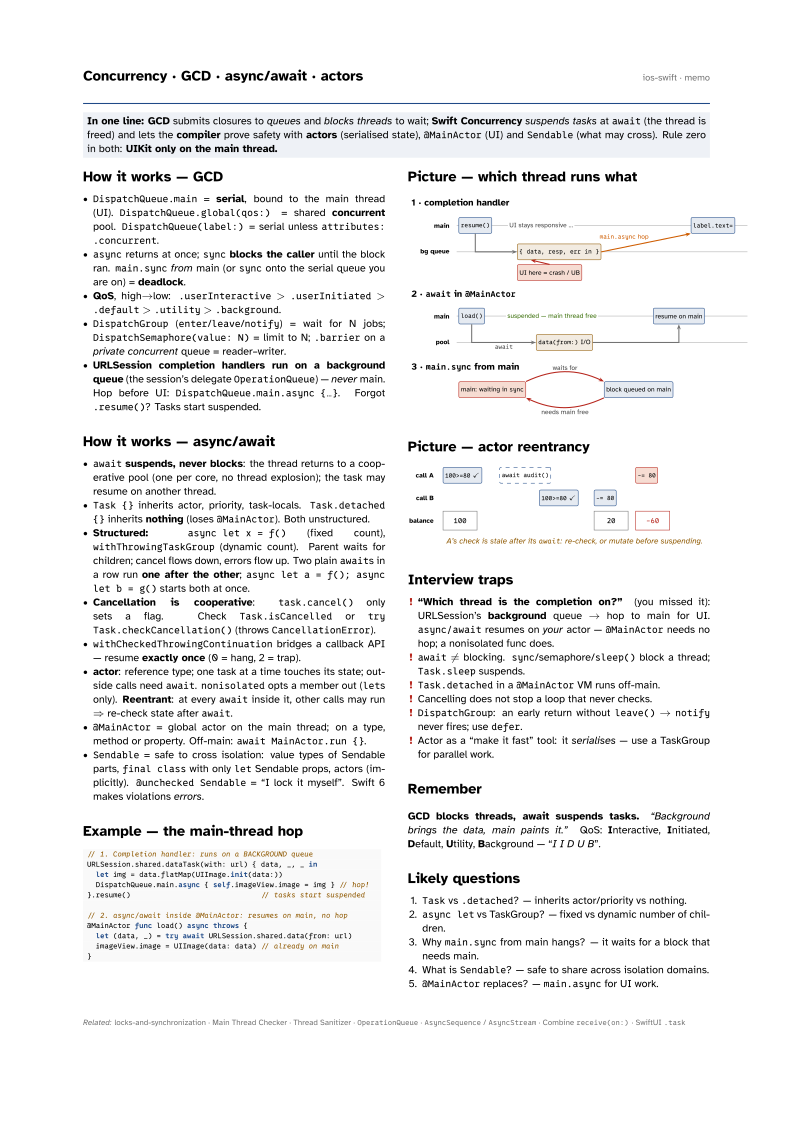
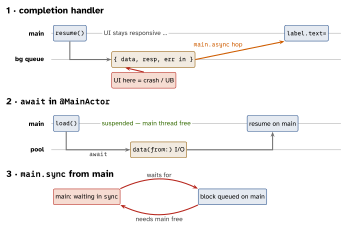
DispatchQueue.main= serial, bound to the main thread (UI).DispatchQueue.global(qos:)= shared concurrent pool.DispatchQueue(label:)= serial unlessattributes: .concurrent.asyncreturns at once;syncblocks the caller until the block ran.main.syncfrom main (orsynconto the serial queue you are on) = deadlock.- QoS, high→low:
.userInteractive>.userInitiated>.default>.utility>.background. DispatchGroup(enter/leave/notify) = wait for N jobs;DispatchSemaphore(value: N)= limit to N;.barrieron a private concurrent queue = reader–writer.- URLSession completion handlers run on a background queue (the session’s delegate
OperationQueue) — never main. Hop before UI:DispatchQueue.main.async {…}. Forgot.resume()? Tasks start suspended.
How it works — async/await
awaitsuspends, never blocks: the thread returns to a cooperative pool (one per core, no thread explosion); the task may resume on another thread.Task {}inherits actor, priority, task-locals.Task.detached {}inherits nothing (loses@MainActor). Both unstructured.- Structured:
async let x = f()(fixed count),withThrowingTaskGroup(dynamic count). Parent waits for children; cancel flows down, errors flow up. Two plainawaits in a row run one after the other;async let a = f(); async let b = g()starts both at once. - Cancellation is cooperative:
task.cancel()only sets a flag. CheckTask.isCancelledortry Task.checkCancellation()(throwsCancellationError). withCheckedThrowingContinuationbridges a callback API — resume exactly once (0 = hang, 2 = trap).- actor: reference type; one task at a time touches its state; outside calls need
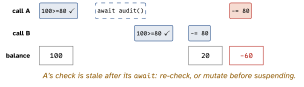
await.nonisolatedopts a member out (lets only). Reentrant: at everyawaitinside it, other calls may run ⇒ re-check state afterawait. @MainActor= global actor on the main thread; on a type, method or property. Off-main:await MainActor.run {}.Sendable= safe to cross isolation: value types of Sendable parts,final classwith onlyletSendable props, actors (implicitly).@unchecked Sendable= “I lock it myself”. Swift 6 makes violations errors.
Example — the main-thread hop
// 1. Completion handler: runs on a BACKGROUND queue
URLSession.shared.dataTask(with: url) { data, _, _ in
  let img = data.flatMap(UIImage.init(data:))
  DispatchQueue.main.async { self.imageView.image = img } // hop!
}.resume()                              // tasks start suspended

// 2. async/await inside @MainActor: resumes on main, no hop
@MainActor func load() async throws {
  let (data, _) = try await URLSession.shared.data(from: url)
  imageView.image = UIImage(data: data) // already on main
}
Picture — which thread runs what
Picture — actor reentrancy
Interview traps
- “Which thread is the completion on?” (you missed it): URLSession’s background queue → hop to main for UI.
async/awaitresumes on your actor —@MainActorneeds no hop; a nonisolated func does. await≠ blocking.sync/semaphore/sleep()block a thread;Task.sleepsuspends.Task.detachedin a@MainActorVM runs off-main.- Cancelling does not stop a loop that never checks.
DispatchGroup: an early return withoutleave()→notifynever fires; usedefer.- Actor as a “make it fast” tool: it serialises — use a TaskGroup for parallel work.
Remember
GCD blocks threads, await suspends tasks. “Background brings the data, main paints it.” QoS: Interactive, Initiated, Default, Utility, Background — “I I D U B”.
Likely questions
Taskvs.detached? — inherits actor/priority vs nothing.async letvs TaskGroup? — fixed vs dynamic number of children.- Why
main.syncfrom main hangs? — it waits for a block that needs main. - What is
Sendable? — safe to share across isolation domains. @MainActorreplaces? —main.asyncfor UI work.