ios-platform · memo
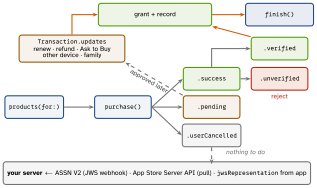
In one line: StoreKit 2 (iOS 15+) is async/await: fetch Products,
await product.purchase(), get back a JWS-signed
Transaction wrapped in VerificationResult —
verify → grant → finish(). Everything that happens
outside your purchase call (renewals, refunds, Ask to Buy, other devices)
arrives on Transaction.updates, which you listen to from launch.
Download PDF Print view LaTeX source
How it works
- Fetch:
try await Product.products(for: ids)→[Product](displayName, localizeddisplayPrice,type). Empty array, no error = App Store Connect config (IDs, Paid Apps agreement). - Types: consumable · non-consumable · auto-renewable sub · non-renewing sub (you track expiry).
- Purchase:
try await product.purchase(options:)→Product.PurchaseResult:.success(VerificationResult)·.userCancelled·.pending(Ask to Buy, SCA — grant nothing; the outcome arrives later onupdates). Option.appAccountToken(UUID)ties it to your user. - Verify:
VerificationResult<T>=.verified(T)or.unverified(T, error). StoreKit checked the JWS signature on device; never unlock on.unverified. SendjwsRepresentationto your server. - Finish:
await t.finish()only after the entitlement is durably recorded; unfinished ones are re-delivered. - Entitlements:
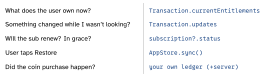
Transaction.currentEntitlements= latest transaction per non-consumable, active auto-renewable and non-renewing sub. No consumables, no refunded (revoked). - Subscriptions: a subscription group allows one active plan. Upgrade = immediate, downgrade = next renewal.
product.subscription?.status→state(.subscribed .expired .inGracePeriod .inBillingRetryPeriod .revoked) +renewalInfo(willAutoRenew,autoRenewPreference). Promo offers need a server signature. - Restore: entitlements sync by themselves on the same Apple Account; the Restore button calls
try await AppStore.sync()(prompts sign-in — only on user tap). - Server: App Store Server Notifications V2 POST a signed JWS (
signedPayload;DID_RENEW,EXPIRED,REFUND,DID_FAIL_TO_RENEW…) to your URL; App Store Server API (JWT from your in-app purchase key) pulls transaction history / subscription statuses. Device decides UX, server decides truth. - Test:
.storekitconfig file (set in the scheme) — offline, refunds, fast renewals,SKTestSession. Sandbox: sandbox accounts, real server, 1 month ≈ 5 min, limited renewals.
Example
func buy(_ p: Product) async throws {
  switch try await p.purchase() {
  case .success(let r):
    guard case .verified(let t) = r else { return } // reject
    await grant(t); await t.finish()   // record THEN finish
  case .pending, .userCancelled: break // pending -> updates
  @unknown default: break
  }
}
// App init: start once, keep for the app's lifetime
let listener = Task.detached {
  for await r in Transaction.updates {
    guard case .verified(let t) = r else { continue }
    await grant(t); await t.finish() }
}
Picture — one purchase, two roads in
Picture — which API answers what
Interview traps
- Trusting
.unverified— the StoreKit security bug. - No
finish()→ redelivered, double grants; finishing before recording → lost purchase. - No
updateslistener at launch → missed renewals, refunds, approvals. - Counting coins via
currentEntitlements— consumables never appear. - Granting on
.pending. Sandbox timing ≠ production. AppStore.sync()at launch — shows a sign-in prompt.
Remember
“V-G-F, and keep ears open”: Verify, Grant, Finish — and Transaction.updates runs from launch. Consumables are yours to count.
Likely questions
- Three purchase results? —
.success(verification),.userCancelled,.pending. - What arrives on
updates? — renewals, refunds, Ask-to-Buy, other-device purchases. - Restore in SK2? — automatic via entitlements; button →
AppStore.sync(). - Why a server? — cross-platform access, tamper-proof truth, ASSN V2 events.
- Test without App Store Connect? —
.storekitconfig file +SKTestSession.