debugging · memo
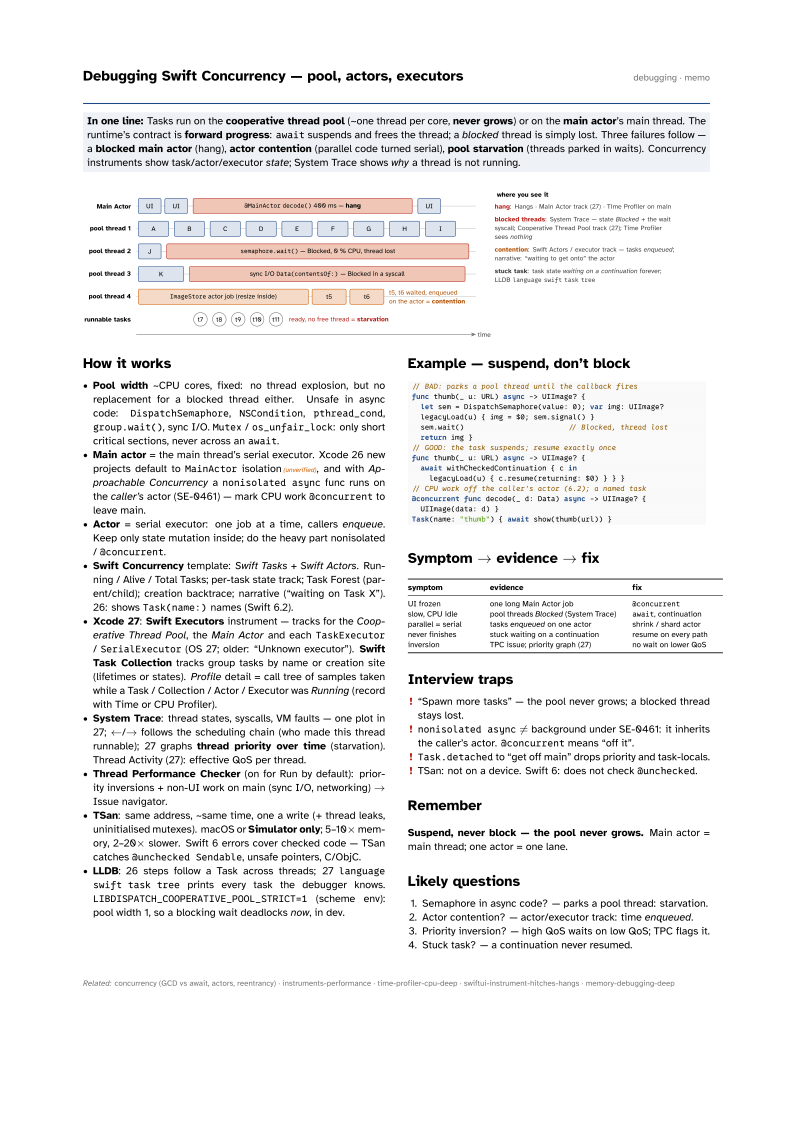
In one line: Tasks run on the cooperative thread pool (~one
thread per core, never grows) or on the main actor’s main thread.
The runtime’s contract is forward progress: await suspends and frees
the thread; a blocked thread is simply lost. Three failures follow — a
blocked main actor (hang), actor contention (parallel code turned
serial), pool starvation (threads parked in waits). Concurrency instruments
show task/actor/executor state; System Trace shows why a thread is not running.
Download PDF Print view LaTeX source
How it works
- Pool width ~CPU cores, fixed: no thread explosion, but no replacement for a blocked thread either. Unsafe in async code:
DispatchSemaphore,NSCondition,pthread_cond,group.wait(), sync I/O.Mutex/os_unfair_lock: only short critical sections, never across anawait. - Main actor = the main thread’s serial executor. Xcode 26 new projects default to
MainActorisolation(unverified), and with Approachable Concurrency anonisolated asyncfunc runs on the caller’s actor (SE-0461) — mark CPU work@concurrentto leave main. - Actor = serial executor: one job at a time, callers enqueue. Keep only state mutation inside; do the heavy part nonisolated /
@concurrent. - Swift Concurrency template: Swift Tasks + Swift Actors. Running / Alive / Total Tasks; per-task state track; Task Forest (parent/child); creation backtrace; narrative (“waiting on Task X”). 26: shows
Task(name:)names (Swift 6.2). - Xcode 27: Swift Executors instrument — tracks for the Cooperative Thread Pool, the Main Actor and each
TaskExecutor/SerialExecutor(OS 27; older: “Unknown executor”). Swift Task Collection tracks group tasks by name or creation site (lifetimes or states). Profile detail = call tree of samples taken while a Task / Collection / Actor / Executor was Running (record with Time or CPU Profiler). - System Trace: thread states, syscalls, VM faults — one plot in 27; ←/→ follows the scheduling chain (who made this thread runnable); 27 graphs thread priority over time (starvation). Thread Activity (27): effective QoS per thread.
- Thread Performance Checker (on for Run by default): priority inversions + non-UI work on main (sync I/O, networking) → Issue navigator.
- TSan: same address, ~same time, one a write (+ thread leaks, uninitialised mutexes). macOS or Simulator only; 5–10× memory, 2–20× slower. Swift 6 errors cover checked code — TSan catches
@unchecked Sendable, unsafe pointers, C/ObjC. - LLDB: 26 steps follow a Task across threads; 27
language
 swift task tree
prints every task the debugger knows.LIBDISPATCH_COOPERATIVE_POOL_STRICT=1(scheme env): pool width 1, so a blocking wait deadlocks now, in dev.
Example — suspend, don’t block
// BAD: parks a pool thread until the callback fires
func thumb(_ u: URL) async -> UIImage? {
  let sem = DispatchSemaphore(value: 0); var img: UIImage?
  legacyLoad(u) { img = $0; sem.signal() }
  sem.wait()                        // Blocked, thread lost
  return img }
// GOOD: the task suspends; resume exactly once
func thumb(_ u: URL) async -> UIImage? {
  await withCheckedContinuation { c in
    legacyLoad(u) { c.resume(returning: $0) } } }
// CPU work off the caller's actor (6.2); a named task
@concurrent func decode(_ d: Data) async -> UIImage? {
  UIImage(data: d) }
Task(name: "thumb") { await show(thumb(url)) }
Symptom → evidence → fix
| symptom | evidence | fix |
|---|---|---|
| UI frozen | one long Main Actor job | @concurrent |
| slow, CPU idle | pool threads Blocked (System Trace) | await, continuation |
| parallel = serial | tasks enqueued on one actor | shrink / shard actor |
| never finishes | stuck waiting on a continuation | resume on every path |
| inversion | TPC issue; priority graph (27) | no wait on lower QoS |
Interview traps
- “Spawn more tasks” — the pool never grows; a blocked thread stays lost.
nonisolated async≠ background under SE-0461: it inherits the caller’s actor.@concurrentmeans “off it”.Task.detachedto “get off main” drops priority and task-locals.- TSan: not on a device. Swift 6: does not check
@unchecked.
Remember
Suspend, never block — the pool never grows. Main actor = main thread; one actor = one lane.
Likely questions
- Semaphore in async code? — parks a pool thread: starvation.
- Actor contention? — actor/executor track: time enqueued.
- Priority inversion? — high QoS waits on low QoS; TPC flags it.
- Stuck task? — a continuation never resumed.