ble · memo
In one line: Bluetooth Mesh floods small messages over BLE advertising (no connections) with pub/sub group addresses; Thread is a routed IPv6 mesh on 802.15.4 reaching the LAN through a border router; Matter is the application layer (data model + security + commissioning) that runs over Thread, Wi-Fi or Ethernet — commissioned over BLE, local-first, multi-admin.
Download PDF Print view LaTeX source
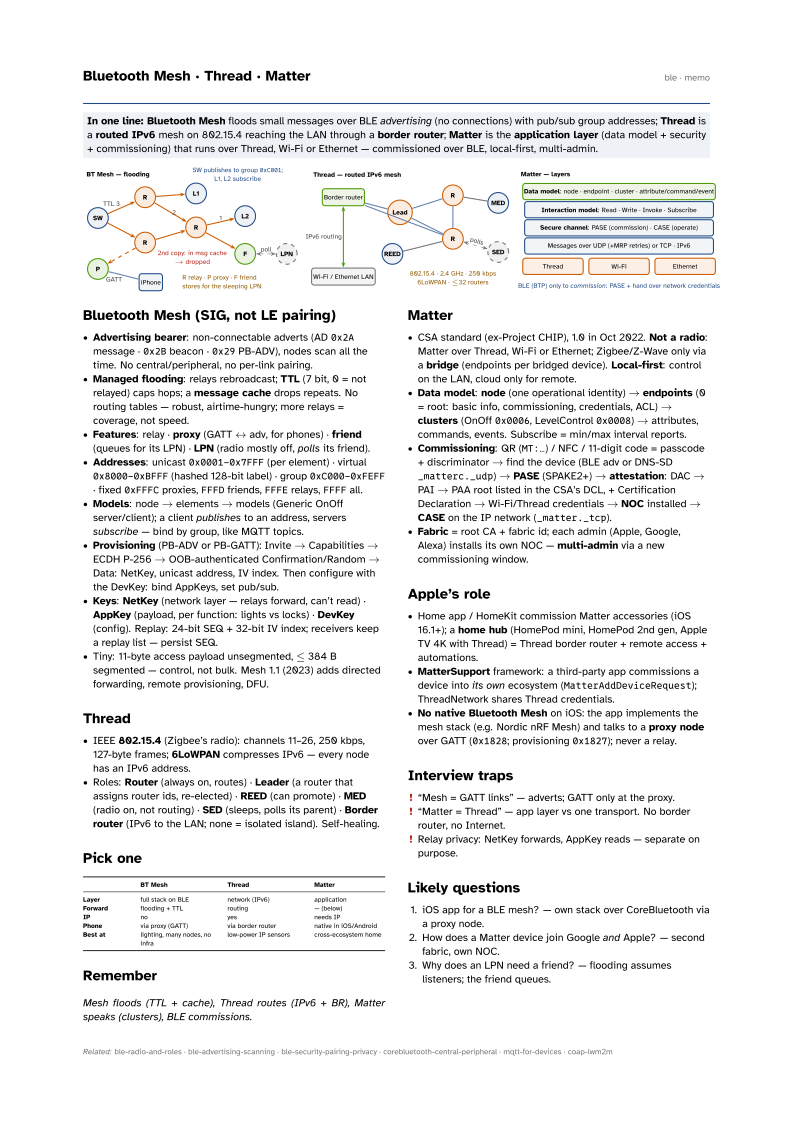
Bluetooth Mesh (SIG, not LE pairing)
- Advertising bearer: non-connectable adverts (AD
0x2Amessage ·0x2Bbeacon ·0x29PB-ADV), nodes scan all the time. No central/peripheral, no per-link pairing. - Managed flooding: relays rebroadcast; TTL (7 bit, 0 = not relayed) caps hops; a message cache drops repeats. No routing tables — robust, airtime-hungry; more relays = coverage, not speed.
- Features: relay · proxy (GATT ↔ adv, for phones) · friend (queues for its LPN) · LPN (radio mostly off, polls its friend).
- Addresses: unicast
0x0001–0x7FFF(per element) · virtual0x8000–0xBFFF(hashed 128-bit label) · group0xC000–0xFEFF· fixed0xFFFCproxies,FFFDfriends,FFFErelays,FFFFall. - Models: node → elements → models (Generic OnOff server/client); a client publishes to an address, servers subscribe — bind by group, like MQTT topics.
- Provisioning (PB-ADV or PB-GATT): Invite → Capabilities → ECDH P-256 → OOB-authenticated Confirmation/Random → Data: NetKey, unicast address, IV index. Then configure with the DevKey: bind AppKeys, set pub/sub.
- Keys: NetKey (network layer — relays forward, can’t read) · AppKey (payload, per function: lights vs locks) · DevKey (config). Replay: 24-bit SEQ + 32-bit IV index; receivers keep a replay list — persist SEQ.
- Tiny: 11-byte access payload unsegmented, ≤ 384 B segmented — control, not bulk. Mesh 1.1 (2023) adds directed forwarding, remote provisioning, DFU.
Thread
- IEEE 802.15.4 (Zigbee’s radio): channels 11–26, 250 kbps, 127-byte frames; 6LoWPAN compresses IPv6 — every node has an IPv6 address.
- Roles: Router (always on, routes) · Leader (a router that assigns router ids, re-elected) · REED (can promote) · MED (radio on, not routing) · SED (sleeps, polls its parent) · Border router (IPv6 to the LAN; none = isolated island). Self-healing.
Pick one
| BT Mesh | Thread | Matter | |
|---|---|---|---|
| Layer | full stack on BLE | network (IPv6) | application |
| Forward | flooding + TTL | routing | — (below) |
| IP | no | yes | needs IP |
| Phone | via proxy (GATT) | via border router | native in iOS/Android |
| Best at | lighting, many nodes, no infra | low-power IP sensors | cross-ecosystem home |
Remember
Mesh floods (TTL + cache), Thread routes (IPv6 + BR), Matter speaks (clusters), BLE commissions.
Matter
- CSA standard (ex-Project CHIP), 1.0 in Oct 2022. Not a radio: Matter over Thread, Wi-Fi or Ethernet; Zigbee/Z-Wave only via a bridge (endpoints per bridged device). Local-first: control on the LAN, cloud only for remote.
- Data model: node (one operational identity) → endpoints (0 = root: basic info, commissioning, credentials, ACL) → clusters (OnOff
0x0006, LevelControl0x0008) → attributes, commands, events. Subscribe = min/max interval reports. - Commissioning: QR (
MT:…) / NFC / 11-digit code = passcode + discriminator → find the device (BLE adv or DNS-SD_matterc._udp) → PASE (SPAKE2+) → attestation: DAC → PAI → PAA root listed in the CSA’s DCL, + Certification Declaration → Wi-Fi/Thread credentials → NOC installed → CASE on the IP network (_matter._tcp). - Fabric = root CA + fabric id; each admin (Apple, Google, Alexa) installs its own NOC — multi-admin via a new commissioning window.
Apple’s role
- Home app / HomeKit commission Matter accessories (iOS 16.1+); a home hub (HomePod mini, HomePod 2nd gen, Apple TV 4K with Thread) = Thread border router + remote access + automations.
- MatterSupport framework: a third-party app commissions a device into its own ecosystem (
MatterAddDeviceRequest); ThreadNetwork shares Thread credentials. - No native Bluetooth Mesh on iOS: the app implements the mesh stack (e.g. Nordic nRF Mesh) and talks to a proxy node over GATT (
0x1828; provisioning0x1827); never a relay.
Interview traps
- “Mesh = GATT links” — adverts; GATT only at the proxy.
- “Matter = Thread” — app layer vs one transport. No border router, no Internet.
- Relay privacy: NetKey forwards, AppKey reads — separate on purpose.
Likely questions
- iOS app for a BLE mesh? — own stack over CoreBluetooth via a proxy node.
- How does a Matter device join Google and Apple? — second fabric, own NOC.
- Why does an LPN need a friend? — flooding assumes listeners; the friend queues.