architecture · memo
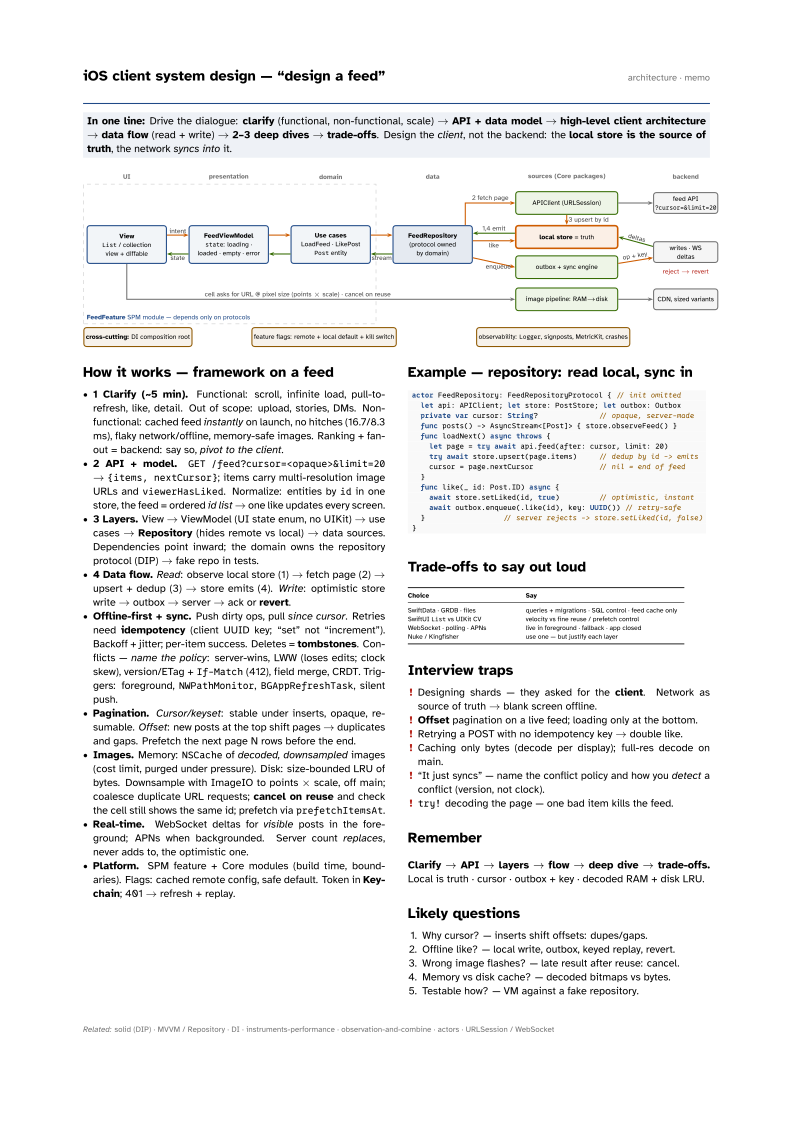
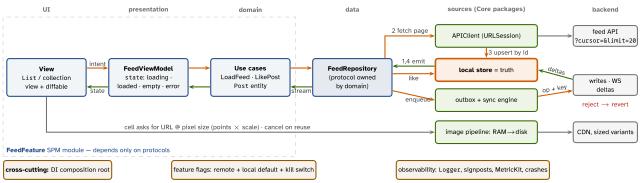
In one line: Drive the dialogue: clarify (functional, non-functional, scale) → API + data model → high-level client architecture → data flow (read + write) → 2–3 deep dives → trade-offs. Design the client, not the backend: the local store is the source of truth, the network syncs into it.
Download PDF Print view LaTeX source
How it works — framework on a feed
- 1 Clarify (~5 min). Functional: scroll, infinite load, pull-to-refresh, like, detail. Out of scope: upload, stories, DMs. Non-functional: cached feed instantly on launch, no hitches (16.7/8.3 ms), flaky network/offline, memory-safe images. Ranking + fan-out = backend: say so, pivot to the client.
- 2 API + model.
GET /feed?cursor=<opaque>&limit=20→{items, nextCursor}; items carry multi-resolution image URLs andviewerHasLiked. Normalize: entities byidin one store, the feed = ordered id list → one like updates every screen. - 3 Layers. View → ViewModel (UI state enum, no UIKit) → use cases → Repository (hides remote vs local) → data sources. Dependencies point inward; the domain owns the repository protocol (DIP) → fake repo in tests.
- 4 Data flow. Read: observe local store (1) → fetch page (2) → upsert + dedup (3) → store emits (4). Write: optimistic store write → outbox → server → ack or revert.
- Offline-first + sync. Push dirty ops, pull since cursor. Retries need idempotency (client UUID key; “set” not “increment”). Backoff + jitter; per-item success. Deletes = tombstones. Conflicts — name the policy: server-wins, LWW (loses edits; clock skew), version/ETag +
If-Match(412), field merge, CRDT. Triggers: foreground,NWPathMonitor,BGAppRefreshTask, silent push. - Pagination. Cursor/keyset: stable under inserts, opaque, resumable. Offset: new posts at the top shift pages → duplicates and gaps. Prefetch the next page N rows before the end.
- Images. Memory:
NSCacheof decoded, downsampled images (cost limit, purged under pressure). Disk: size-bounded LRU of bytes. Downsample with ImageIO to points × scale, off main; coalesce duplicate URL requests; cancel on reuse and check the cell still shows the same id; prefetch viaprefetchItemsAt. - Real-time. WebSocket deltas for visible posts in the foreground; APNs when backgrounded. Server count replaces, never adds to, the optimistic one.
- Platform. SPM feature + Core modules (build time, boundaries). Flags: cached remote config, safe default. Token in Keychain; 401 → refresh + replay.
Example — repository: read local, sync in
actor FeedRepository: FeedRepositoryProtocol { // init omitted
  let api: APIClient; let store: PostStore; let outbox: Outbox
  private var cursor: String?              // opaque, server-made
  func posts() -> AsyncStream<[Post]> { store.observeFeed() }
  func loadNext() async throws {
    let page = try await api.feed(after: cursor, limit: 20)
    try await store.upsert(page.items)     // dedup by id -> emits
    cursor = page.nextCursor               // nil = end of feed
  }
  func like(_ id: Post.ID) async {
    await store.setLiked(id, true)         // optimistic, instant
    await outbox.enqueue(.like(id), key: UUID()) // retry-safe
  }                  // server rejects -> store.setLiked(id, false)
}
Trade-offs to say out loud
| Choice | Say |
|---|---|
| SwiftData · GRDB · files | queries + migrations · SQL control · feed cache only |
SwiftUI List vs UIKit CV | velocity vs fine reuse / prefetch control |
| WebSocket · polling · APNs | live in foreground · fallback · app closed |
| Nuke / Kingfisher | use one — but justify each layer |
Interview traps
- Designing shards — they asked for the client. Network as source of truth → blank screen offline.
- Offset pagination on a live feed; loading only at the bottom.
- Retrying a POST with no idempotency key → double like.
- Caching only bytes (decode per display); full-res decode on main.
- “It just syncs” — name the conflict policy and how you detect a conflict (version, not clock).
try!decoding the page — one bad item kills the feed.
Remember
Clarify → API → layers → flow → deep dive → trade-offs. Local is truth · cursor · outbox + key · decoded RAM + disk LRU.
Likely questions
- Why cursor? — inserts shift offsets: dupes/gaps.
- Offline like? — local write, outbox, keyed replay, revert.
- Wrong image flashes? — late result after reuse: cancel.
- Memory vs disk cache? — decoded bitmaps vs bytes.
- Testable how? — VM against a fake repository.